Yesterday, Tuesday, May 19th, 2026, was my last infusion day of this round of chemo and, because I am a bit of a data nerd, I thought it might be interesting to show the trends in my bloodwork, weight, and step count since my first infusion day—and share why these things matter in this block of my cancer journey.
The graphs below start on March 4th, the week before my infusions began, when I went in for an “emergency” meeting with my oncologist because I was really not feeling well at all. I was afraid I was starting chemo from a poor baseline and, it turns out, I was mildly anemic—which is not an ideal place to begin.
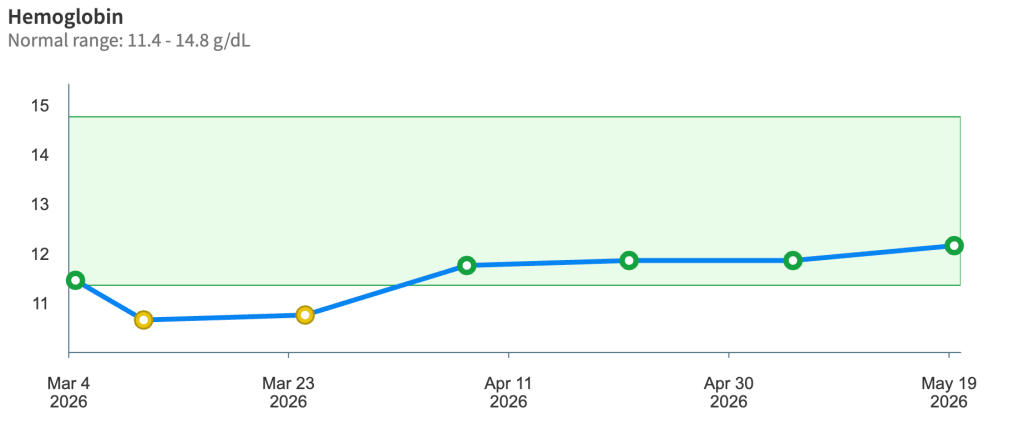
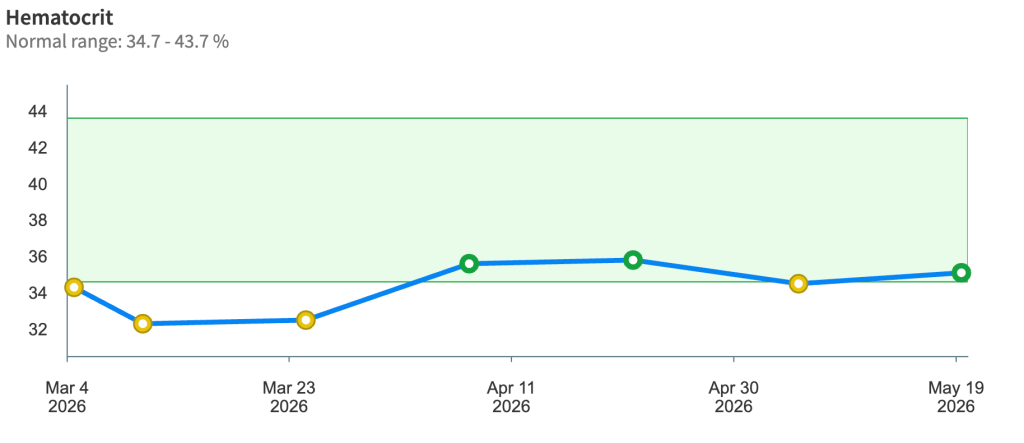
If you’ve been following along, you’ll remember I got iron infusions once a week for three weeks at the start of this chemo cycle. Iron infusions typically “kick in” about four to six weeks after they’re given—and the data shows almost exactly when that happened.
The graphs below end with the bloodwork drawn before my sixth infusion. (Blood was drawn before every treatment to make sure I was safe enough to continue.) Which means some of these lines probably kept dropping afterward as the cumulative effects of chemo continued to build in this round, round six.
That said, the data below is great.
I was told there was about a 50/50 chance I’d have to miss or delay an infusion because a blood count would be off, but I made it through all six rounds without delay. Without pretending to be a medical expert, I do think these trends reflect a combination of entering treatment with a relatively healthy baseline, excellent medical care, some good luck, and how hard I leaned into eating, sleeping, hydrating, and continuing at least a little movement throughout this entire process.
It’s another reminder, at least for me, that micro-movements can produce macro results.
While I am currently on the brink of feeling terrible—I’m still plugged into my chemo pump, “Sir Spits a Lot,” for another 20-ish hours as I write this and don’t expect to turn the corner for another four or five days—I’m really proud of what I was able to do to help keep myself healthy through this block.
And if you, too, are into data—or the stories data helps us tell—read on.
BLOOD WORK
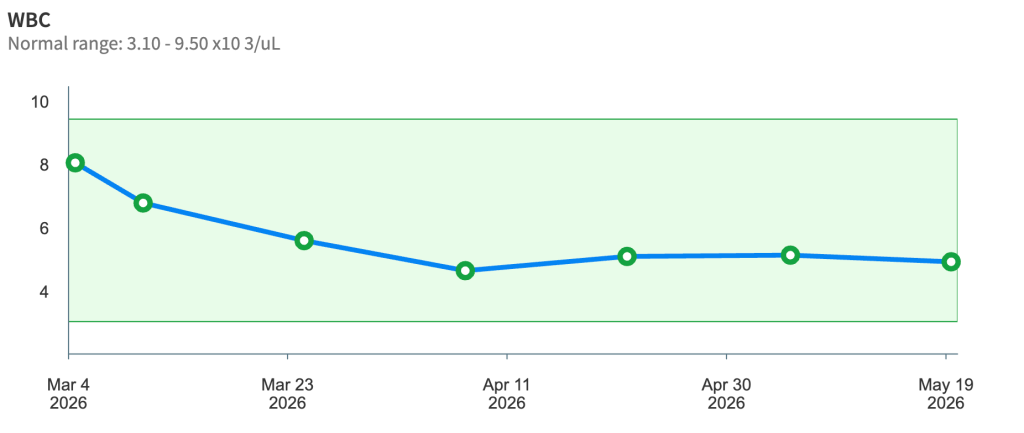
WBC (White Blood Cell count)
Purpose: measures immune function
Why we care: Can I fight infection?
What I did to support good WBC levels: prioritize protein in my “active recovery weeks (the weeks between infusions). Why? In brief, chemo destroys a lot of cells, cells need basic building blocks—like amino acids from proteins—to rebuild.
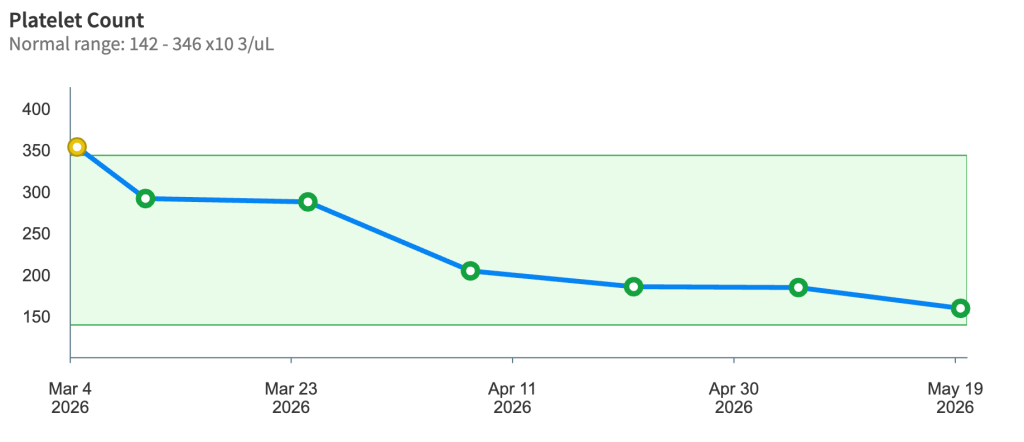
Platelet Count
Purpose: measures clotting ability
Why we care: Can my body clot? We really care about this measurement—and my WBC—staying in the green as I head into surgery in four and a half weeks. I’ll have another blood draw before then to make sure, as it’s possible this line followed the trend and dipped into the yellow after my sixth infusion.
What I did to support good platelet levels: these guys like all the basic stuff—calories, iron/B12, protein, hydration, sleep. I leaned into all of that. This is, after all, my full-time job.
Hemoglobin
Hematocrit
Purpose: anemia indicators
Why we care: Am I dangerously exhausted?
What I did to support these: reported my anemia symptoms immediately and got me some iron! Also, ironically, ever so slightly upped my red meat intake (while still sitting within the “nutrition to reduce breast cancer recurrence” guidelines).
*my first iron infusion was the day of the second dot
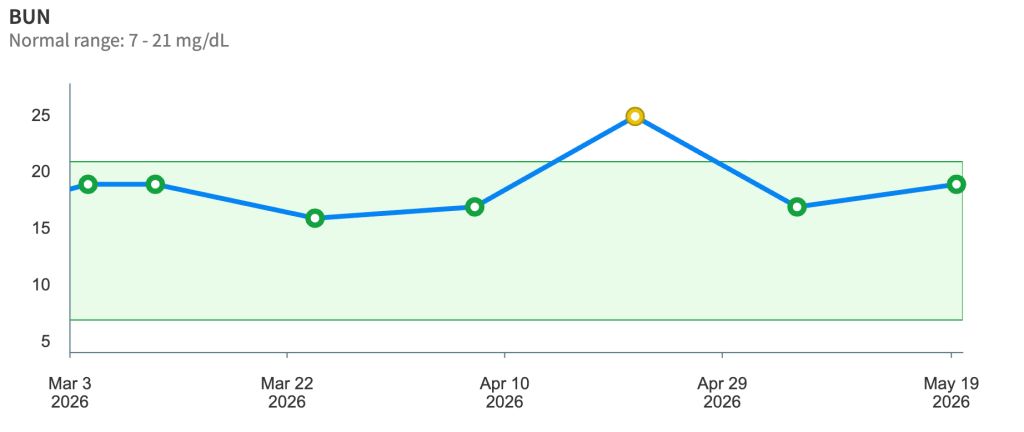
BUN
Purpose: tracks hydration
Why we care: Almost too many to list—kidney protection, blood pressure and circulation, supports digestion, helps rebuild cellular systems, helps with fatigue, helps vein and infusion comfort
What I did to support this: I have always been a huge water drinker. You’ll never see me without a bottle or water source nearby but I consumed a ton of electrolytes—a pack a day of BUBS hydration packs every day in the active chemo week, then half-packs or coconut waters in the weeks in between. These are way more electrolytes than are generally advised to take, but I watched my electrolyte levels in my bloodwork like a hawk every week and they all stayed in the safe zone. Turns out your body is working like hell during chemo, and my body was craving more hydration support so I gave it to her.
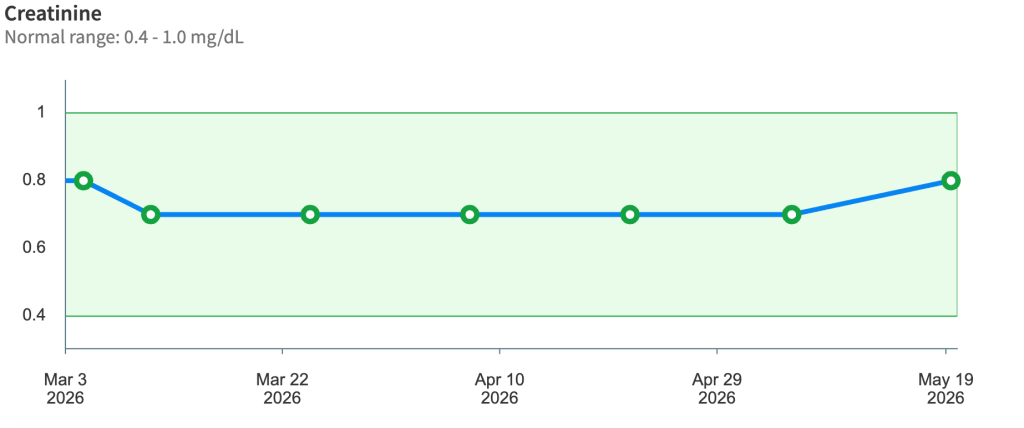
Creatinine
Purpose: measures kidney function
Why we care: Are my kidneys handling this?
What I did to support this: see above. Hydrated like a mad woman.
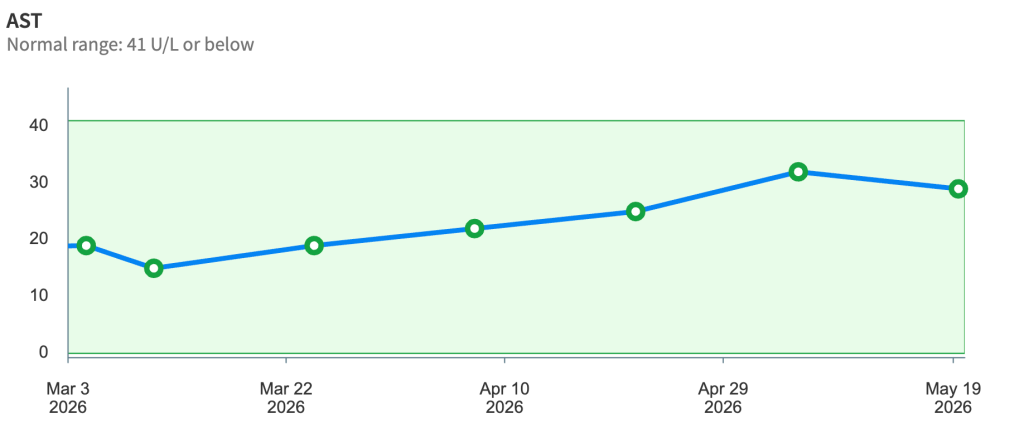
AST
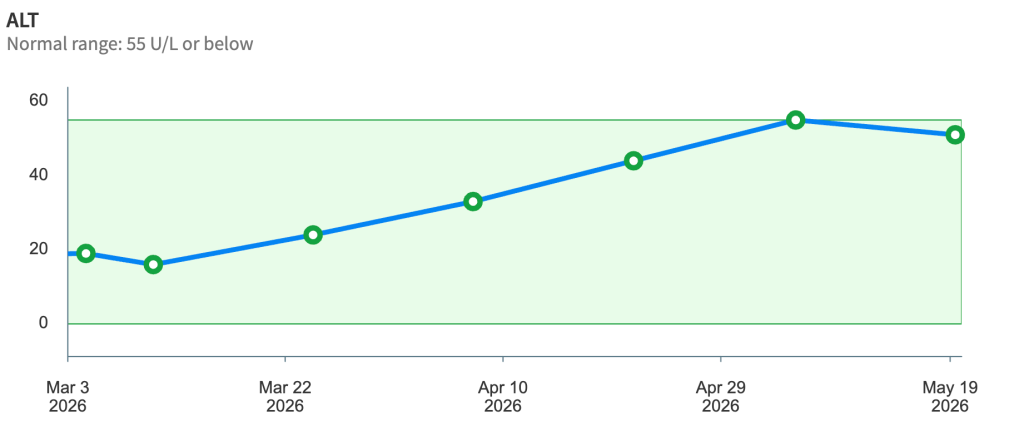
ALT
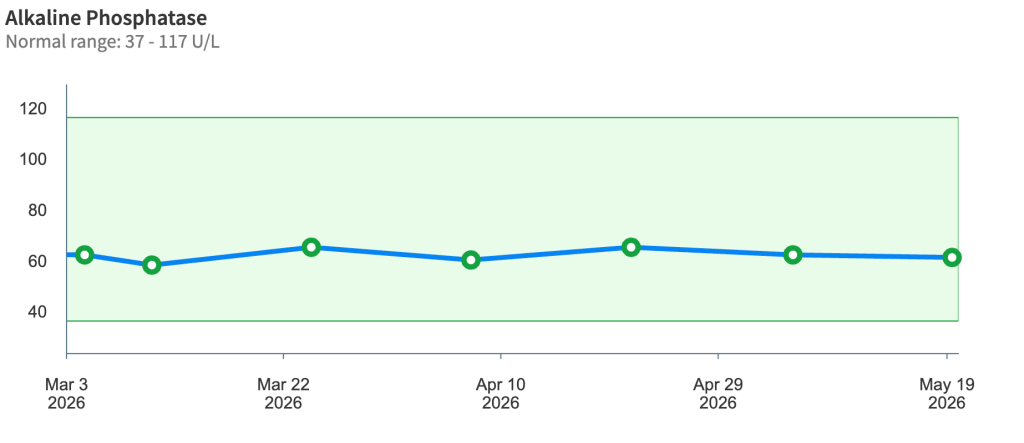
Alkaline Phosphatate
Purpose: measures liver function.
Why we care: Is my liver tolerating treatment?
What I did to support this: consuming enough calories, protein, hydration, and avoiding unnecessary medications (and not drinking alcohol which is basically a given).
WEIGHT
I am happy to report I gained weight during chemo. Three to five pounds. Amazing.
Why does this matter? Because weight loss during treatment is associated with poorer treatment tolerance and nourishing yourself through a process that is literally trying to kill you (and cancer) is essential, frankly, to survival.
Now, I am certain I lost a ton of muscle mass, which I do not love, but I’m still proud I maintained—and even gained—a little weight through this block.
Also, perhaps a post for another time: I ate like it was my fucking job.
Which, basically, it was.
STEPS/MOVEMENT
I also do not love how little I moved during chemo. It hit me harder than I expected and there were definitely stretches where walking to the parking lot felt like an accomplishment.
But I’ve kept up with PT and—surprise to me—my Oura ring shows my average step count has actually increased since my mastectomy in February.
Fun!
Clearly I have a long way to go before I’m back to where I was pre-diagnosis, but this feels like another reminder that small 1% shifts really can compound over time.
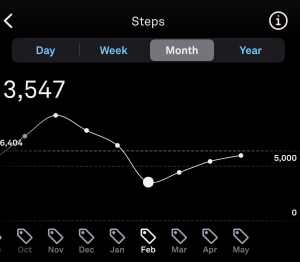
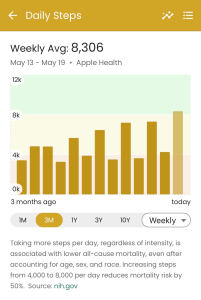
The next image is from an app I use called Guava. It syncs with my medical records and Oura ring and gives me a place to track symptoms, bowel movements, medications, etc.
I like this graph because you can clearly see “chemo on week” versus “chemo off week.” The pattern is actually pretty cool: I was fairly consistent during infusion weeks and then made gains during the off weeks—even as the side effects became more cumulative over time.
Fun!
(Also, note the NIH stats at the bottom.)
Screenshot
To listen to an audio version of this on Spotify, click here. To listen on Apple Podcasts, click here.
If you enjoyed this post you may also like, this FAQ about what I had been working on in physical therapy.
To see other Diagnosis / Treatment Updates, visit the archive here.
To get posts sent directly to your inbox, enter your email in the box below or click “Subscribe” at the top of the page.


3 Comments
Very informative…..Dr Houseworth. I applaud all of your gains, progress, strength, insight…..well just everything.
Love you lots
D
So cool to see all of this info in graphs…love visual data displays. Your tracking skills are incredible. I had to read this 3x to get my head around how all of these chemical/physical pieces work together. I applaud your resilience and level of self-care! Keep kicking ass! 😘
Phenomenal post. So cool to see all the data. You have such a skill for deep research and presenting distilled content. I’m so grateful you’ve leaned into self care at this time, even when it’s so, so hard. I’ll be thinking about you as you enter this last stretch of feeling terrible. You got this. Can’t wait to celebrate the milestone of getting through this round of chemo with you! Love you!